


When buying a home, understanding the costs of property taxes is critical for budgeting and financial planning. But for first-time buyers, navigating the complexities of property taxes can feel like deciphering a foreign language. This is especially true when comparing the property tax obligations for new construction and existing homes.
In this blog, let’s dive into the differences in property tax assessments for these two types of properties, helping you make informed decisions.
What Are Property Taxes?
Property taxes are annual taxes imposed by local governments on real estate, including land and buildings. They are a primary funding source for public services such as schools, roads, emergency services, and local infrastructure. Property tax is typically an Alamo ad valorem tax, meaning it is based on the assessed value of the property. The higher the assessed value, the higher the tax obligation.
Property owners are responsible for paying these taxes as long as they own the property. Tax rates and rules vary by state, county, and city.
How Property Taxes Work
Property taxes are generally calculated using two key components:
- Assessed Property Value – Determined by the local appraisal district or tax assessor, this represents an estimate of the property’s market value.
- Local Tax Rate – Set by local taxing authorities such as counties, school districts, and municipalities.
The basic formula is:
Property Tax = Assessed Value × Tax Rate
Even if tax rates remain stable, a rise in assessed value can increase the tax bill. Assessments may change due to market trends, new construction, or property improvements.
Sample Tax Calculation
Suppose a home has an assessed market value of $350,000, and the combined local tax rate is 2%.
$350,000 × 0.02 = $7,000 in annual property taxes
If the home’s assessed value increases to $380,000 the following year while the rate stays the same:
$380,000 × 0.02 = $7,600
This illustrates how higher valuations alone can increase a tax bill.
How to Appeal Your Property Tax Assessments
If you believe your property has been overvalued, you have the right to challenge the assessment. Most jurisdictions provide a formal protest process.
Steps typically include:
- Reviewing your property record for factual errors
- Gathering evidence such as comparable recent home sales
- Filing a protest before the deadline listed on your notice
- Presenting your case at an informal or formal hearing
Strong evidence often includes sales data for similar properties, photos showing condition issues, or independent appraisals. Missing the filing deadline usually forfeits your right to appeal for that year.
Homeowners in Texas often work with firms like Alamo Ad Valorem for assistance preparing valuation protests.
Local Tips (State or City-Specific Rules)
Property tax rules vary widely by state. For example:
- Texas reassesses property annually based on market value, and homeowners may qualify for a homestead exemption that lowers taxable value.
- Some states have limits on how much assessed value can increase each year unless ownership changes.
Because assessment practices, exemptions, and protest deadlines differ by jurisdiction, homeowners should always review guidance from their local appraisal district.
How are New Construction and Existing Homes Assessed for Tax Calculation?
Both new and existing homes undergo property tax assessments, determining their “taxable value”- estimated market worth of the property used to calculate your annual tax bill. The process involves comparing your property to similar ones in your area, considering factors like size, location, and amenities.
New Construction
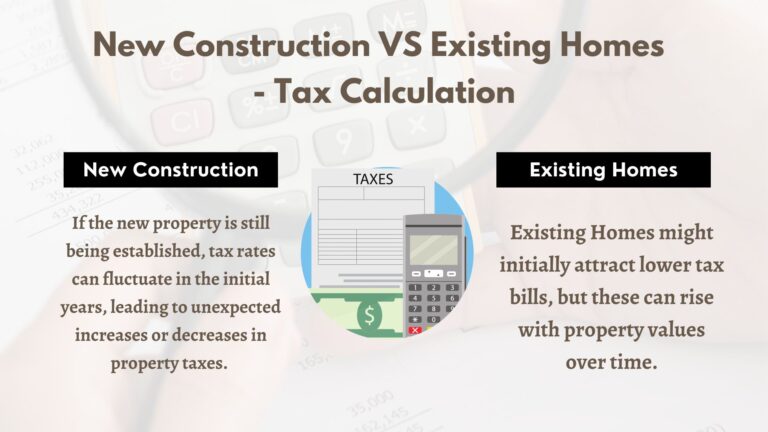
New construction homes undergo an initial assessment once construction is complete. For freshly built homes, the assessor typically relies on land value, construction costs, permits, comparable properties, and even fancy upgrades like swimming pools. This typically leads to a higher assessed value initially, and consequently, potentially higher property taxes in the first few years. If the new property is still being established, tax rates can fluctuate in the initial years, leading to unexpected increases or decreases in property taxes.
Existing Homes
Existing homes usually have an established market value based on past sales and assessments, often lower than brand new ones. However, property tax rates for existing homes change gradually, typically based on inflation or cost-of-living adjustments. Moreover, renovations or additions can trigger reassessments, potentially increasing the value and, in turn, the tax burden. To sum it up, existing homes might initially attract lower tax bills, but these can rise with property values over time.
Tax Rates and Bills
Once your home’s value is set, the tax rate applied to it determines your annual bill. These rates vary by location, with municipalities setting them to fund local services like schools and roads. For example, as of 2023, the average effective property tax rate in Texas is 1.60%. Generally, the tax rate stays constant, but the assessed value can fluctuate, impacting your bill over time.
Tax Advantages of New Construction
While new construction homes might carry a higher initial tax burden, they often come with benefits. Many states offer tax incentives for energy-efficient features or first-time homebuyers, reducing your tax bill. Additionally, newer homes tend to depreciate at a slower rate, potentially mitigating future tax increases.
Tax Advantages with Existing Properties
Older homes may have lower assessed values and, consequently, lower property taxes. Additionally, their established tax history creates predictability in future bills. You may also find tax breaks for historic preservation or other programs specific to older homes in your area.
How to Choose Between New Construction and Existing Homes?
Choosing between new construction and existing homes involves many factors, and property taxes are just one piece of the puzzle. While new homes might initially cost more in taxes, they offer potential savings through incentives and slower depreciation. Existing homes have established tax profiles and may benefit from specific programs, but renovations can trigger reassessments. Ultimately, the best choice depends on your budget, preferences, and local policies.
Be Watchful of Incorrect or Inaccurate Evaluations
No doubt, property taxes play a significant role in your overall homeownership costs, and understanding the nuances can contribute to effective budgeting and financial planning. However, instances of incorrect property assessments are not uncommon. And in such cases, Alamo Ad Valorem can be your ally. With our expertise in property tax appeals, they ensure you pay your fair share and not a cent more. Don’t hesitate to seek our support if you suspect an incorrect evaluation.
Does new construction always have higher taxes?
Not always, but new homes are typically assessed at full market value once construction is complete, which can result in higher taxes compared to older properties that may have been assessed years earlier.
Do property taxes increase when a home is sold?
In many states, a sale can trigger a reassessment at current market value, potentially increasing taxes if the previous assessed value was lower.
Can I appeal a property tax increase?
Yes. Homeowners can challenge an assessment if they believe it exceeds market value or contains errors.
Do new construction homes get reassessed after they are completed?
Yes. Once construction is finished, appraisal districts typically reassess the property to include the full value of the home and land.
Why are property taxes on new homes sometimes higher than expected?
Initial tax estimates may be based only on land value or partial construction. A full reassessment after completion can significantly increase the assessed value.
Are property taxes lower on older homes?
They can be if the home hasn’t been reassessed recently or is in poorer condition. However, market appreciation and renovations can still increase taxes.
How long does it take for property taxes to adjust after buying a home?
Adjustments often occur during the next annual assessment cycle, depending on local rules.
Do property improvements increase property taxes?
Yes. Additions and major renovations usually raise assessed value.
Can a newly built home qualify for property tax exemptions?
Yes. Homeowners may qualify for exemptions such as homestead, senior, or veteran exemptions, depending on eligibility and local laws.
Why did my property tax bill go up even though tax rates stayed the same?
An increase in assessed value alone can raise the total tax owed.
Are property taxes based on purchase price or market value?
They are generally based on assessed market value determined by the appraisal authority, not strictly the purchase price.
What evidence helps when appealing a property tax assessment?
Comparable sales data, repair estimates, condition photos, and independent appraisals are commonly used.
What happens if I don’t agree with my property tax assessment?
You can file a protest within the deadline. If unsuccessful, some jurisdictions allow further appeals through review boards or courts.